Robotics
Yaskawa Robot Painting Integration for Factories in Indonesia
PT Solusi Rekatama Makmur has been Yaskawa's authorized distributor and system integrator in Indonesia since 2009. We design, supply, install, and commission Yaskawa Motoman painting robot cells inside customer plants — the explosion-proof robot together with its interfaces to the booth, the conveyor, the paint supply system, the control panel, and the safety circuit.
Our technical base is at MM2100 Cibitung, Bekasi, with head office in Jakarta and a branch in Surabaya. If your paint line is running up against film thickness consistency, paint consumption, or operator exposure inside the booth, we can start with a feasibility study before you commit capital. Reach us on WhatsApp (opens in a new tab) or at sales@solusirm.com.
Why plants in Indonesia hand us their painting cell
- Authorized Yaskawa Motoman distributor and system integrator in Indonesia since 2009
- PT Solusi Rekatama Makmur was established in 2002 and has worked in industrial finishing equipment ever since
- 500+ completed projects across automotive, manufacturing, and general industry
- ISO 9001:2015 and SMK3 certified — which matters because a painting cell works inside a hazardous area
- Robotics training centre and sealing demo lab at MM2100 Cibitung, Bekasi: the robot can be seen and run before you decide
- One team covering booth, paint supply, and robot, so the interfaces between them are not a grey area between vendors
- Robot spare parts and consumables held at Cibitung, with a 24/7 service response commitment for lines already in production
When a paint line is actually ready for a robot
A painting robot is not the answer for every plant, and we would rather say so early. What decides it is not company size but how repetitive the work is and how expensive inconsistency has become.
The pattern we see most often before a plant moves to a robot looks like this: output has stabilised, part shapes are broadly similar, but the finish differs between operators and between shifts. Rework climbs, paint consumption becomes hard to forecast, and QC spends its time catching what should have been settled inside the booth.
The second reason comes up just as often: safety. A booth is a hazardous area full of solvent vapour, and keeping a person inside it for a whole shift carries consequences that PPE does not remove. Plenty of plants open the robot conversation from a safety audit or an OEM customer's requirement rather than from a productivity figure.
- Stable output with part variation that can be grouped into a manageable set of programs
- Film thickness specifications checked per unit rather than per batch
- Rework or rejects that trace back to how the part was sprayed, not to the material
- Difficulty keeping trained spray operators over the long term
- Safety requirements or customer audits covering solvent exposure inside the booth
- Plans to add colours or shifts that would make manual consistency harder still
Explosion-proof is a construction requirement, not a label
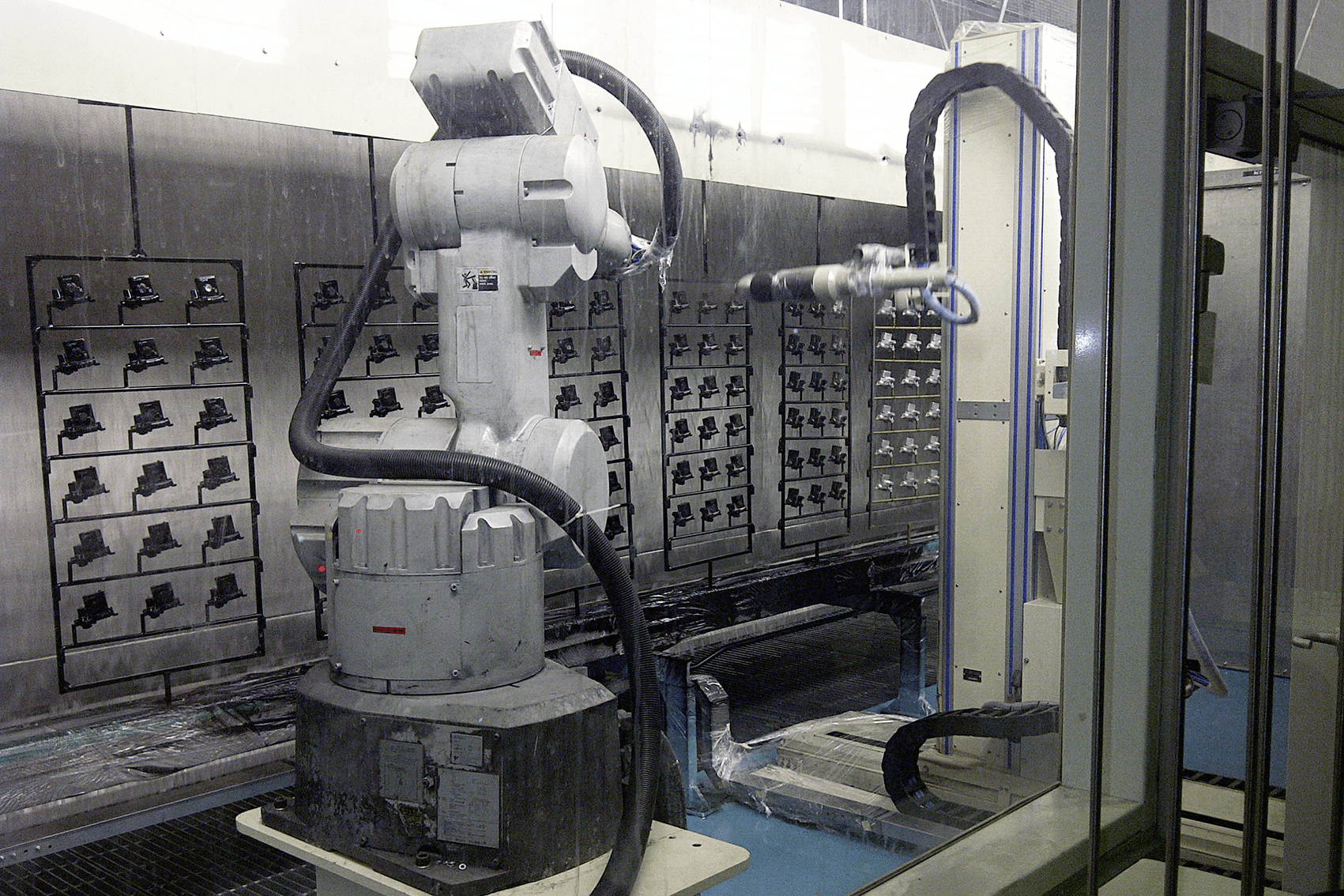
A robot working inside a paint booth sits in an area formally classified as hazardous because of flammable solvent vapour. Painting robots are therefore built differently from handling robots: the robot body is held at positive pressure with clean air so vapour cannot get in, and every electrical component inside it is designed for that condition.
The Yaskawa Motoman MPX family is built for exactly this duty and is certified explosion-proof for hazardous areas. What a buyer needs to understand is that the certification attaches to the robot together with how it is installed. The purge unit, the air supply, keeping the controller outside the hazardous area, and the cable routing are all part of the same compliance. A certified robot installed carelessly no longer satisfies anything.
This is usually what separates an integrator from a robot reseller. What we hand over is not a robot unit but a complete cell whose hazardous-area compliance you can show when you are audited.
What our scope covers in one painting cell
A painting cell works when every part of it agrees on one thing: when the part is in front of the robot, and when the robot is allowed to spray. That agreement does not appear by itself if robot, booth, conveyor, and paint supply are each handled by a different party with nobody accountable for the whole.
So we take one cell as one scope. We have delivered booths, paint circulation systems, and robots on earlier projects, which means the interfaces between them are work we own rather than an assumption handed to another vendor.
- The explosion-proof painting robot with its controller and purge unit
- The robot mounting — floor, rail, or wall — to suit the booth layout and conveyor direction
- Interfaces to the gun, bell, or applicator with the paint and air lines to the robot
- Integration with the paint circulation system so applicator pressure stays stable while the robot works
- Conveyor and part detection interfaces: position signals, tracking, and spray enable
- PLC and HMI control panel for program selection, monitoring, and parameter logging
- The safety circuit: booth door interlocks, emergency stops, and access control for the area
- Initial programs for each part group, plus training so your team can write the next ones
The Yaskawa Motoman robots we put inside the booth
Choosing a painting robot is not about finding the largest one. It is about matching reach, wrist payload, and wrist form to the parts and the booth you already have. A hollow wrist, for instance, decides whether the paint hose can run inside the arm — which bears directly on snagging risk and on how easily the cell is cleaned.
We use the MPX family for painting and dispensing duty inside the booth. For small and medium parts with tight contours, a compact robot usually gives better access than a large one with reach to spare. For large parts the deciding factor is more often the combination of reach and mounting — frequently the robot goes on a rail so it can follow the length of the part.
What we always recommend before settling on a model is a reach study: a simulation of reach and motion using your actual part and booth geometry. It is far cheaper to discover on screen that a model cannot get into a particular corner than to discover it after the robot is installed.
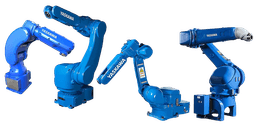
- MPX Series — explosion-proof Motoman painting robots for coating and dispensing inside the booth, in several reach and wrist configurations
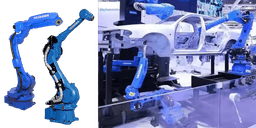
- GP Series — handling robots for loading and unloading parts onto hangers or jigs around the painting cell
Try it at Cibitung before you decide
A painting cell is not a comfortable decision to make from a brochure. That is why we run a robotics training centre and sealing demo lab at MM2100 Cibitung, where Yaskawa robots stand and can be run.
The most useful part of a visit is usually not watching the robot move but watching your own team try to operate it. How hard is it to write a new program, how long does a colour change take, who at the plant will actually own the robot — those questions are far easier to answer standing in front of the unit.
If your parts can travel, some trials can be run in our lab as input before a quotation is prepared. That is part of the evaluation, not a coating service — the result exists to judge feasibility, not to be shipped back as finished product.
The arithmetic that decides whether a cell makes sense
The most common question is payback, and the honest answer always depends on your own plant data. What we can do is show which variables drive that number, then fill them in with your figures rather than with generic assumptions.
Four things usually matter most: paint consumed per unit, rework and reject rates, the units per hour you can hold across a full shift, and the costs that never reach the books, such as QC time and reprocessing. In many cases material savings and lower rework move the number more than labour does, because operators tend to be redeployed rather than removed.
We do not quote savings figures as a promise. What we bring to the table is a way of calculating them with your data, and a quotation broken out by section so you can judge what is essential and what can wait.
Manual spraying, reciprocators, and painting robots
All three apply paint, but they answer different needs. This table uses the considerations that come up first, before anyone reaches the cost calculation.
| Manual spraying | Reciprocator | Painting robot | |
|---|---|---|---|
| Consistency between units | Depends on the operator and the day | Consistent on flat surfaces | Consistent including on 3D contours |
| Fit to part shape | Most flexible | Flat parts or panels on a conveyor | Contoured parts, variation handled by program |
| Changeover between part types | Immediate, the operator is told | Mechanical resetting required | Program change, no mechanical setup |
| Operator solvent exposure | Operator stands inside the booth | Operator outside the booth | Operator outside the booth |
| Transfer efficiency | Varies between operators | Steady on a fixed pattern | Steady and tunable per program |
| Up-front investment | Lowest | Middle | Highest |
| Best suited to | Low volume, highly variable parts | Uniform panels at high volume | Steady volume with contoured parts and tight specifications |
How we run a painting cell project
Plant visit and part survey
We look at the booth and conveyor you have, record part dimensions and weights, the paints in use, film thickness specifications, and the target output per hour. That tells us whether a cell fits the existing booth or whether the booth belongs in the conversation too.
Reach study and motion simulation
Your part and booth geometry goes into a simulation to confirm the chosen robot reaches every surface that must be sprayed, without collisions and without extreme postures that slow the cycle.
Cell design and a quotation broken out by section
We lay out the cell, the robot mounting, the paint and air routing, the safety circuit, and the control panel scope. The quotation is itemised so you can see what is mandatory and what can follow later.
Installation and integration on site
The robot is installed, the interfaces to booth, conveyor, and paint supply are wired, and the safety circuit is proven point by point before the robot is ever run with paint.
Commissioning and the first programs
We write programs for the first part group, set the spray parameters, and verify the result against the film thickness specification you work to.
Operator and maintenance training
Your team is trained on daily operation, writing and editing programs, handling alarms, and routine maintenance. Training can run at your plant or at our centre in Cibitung.
Spare parts and service once it is running
Robot spare parts and consumables are held at Cibitung, with a 24/7 response commitment for lines in production. We also help you draw up the list of components worth stocking yourself.
We install the robot; we are not a coating job shop
So that nobody's time is wasted: PT Solusi Rekatama Makmur is an equipment supplier and system integrator, not a painting service. We do not take in parts or units to be coated at our premises.
What we deliver is production capability standing inside your own plant — a painting robot cell you own, you operate, and your team maintains. If what you need is to send parts out to be painted by somebody else, you are looking for a coating service or job shop rather than an integrator.
Part trials at the Cibitung demo lab are part of technical evaluation before a purchase, and we do not run them as a production service.
Frequently asked questions about painting robot integration
- Can a painting robot be installed in an existing booth?
- Often yes, and that is most of what we do. What decides it is the clear space inside the booth, the strength and position of the robot mounting, exhaust capacity, and whether clean air is available for the purge. We check all of it during the plant visit, before any cost is committed.
- What does explosion-proof actually mean on a painting robot?
- The robot is built to work in an area containing flammable solvent vapour: the body is held at positive pressure with clean air so vapour cannot enter, and its electrical components are designed for that condition. Compliance attaches to the installation as well — purge unit, air supply, controller placement, and cable routing are all part of the same requirement.
- Who operates the robot once it is installed?
- Your own team. During commissioning we write the programs for the first part group, then train your operators and maintenance staff to run it, edit programs, handle alarms, and carry out routine maintenance. Training can run at your plant or at our centre in Cibitung.
- How long before a painting cell is in production?
- It depends on scope: whether the booth exists, whether the paint supply needs work, how many part groups must be programmed up front, and how your shutdown schedule falls. After the plant visit we give you a staged schedule rather than a single number.
- Can one robot handle several colours?
- Yes, and what decides it is not the robot but the supply and colour change arrangement built into the cell. How many colours, how often you switch, and how much cleaning time you can accept will shape the paint routing and applicator we propose.
- Does PT Solusi Rekatama Makmur take in parts for painting?
- No. We design, install, and commission painting robot cells inside customer plants, and we do not receive parts for coating. If your need is to send parts out to be painted, you are looking for a coating service or job shop rather than a systems integrator.
- What spare parts and service support follows the cell?
- Robot spare parts and consumables are held at Cibitung, and our service team works to a 24/7 response commitment for lines in production. During training we also set out which components are worth stocking at your own plant.
Related reading
- How a Painting Robot Is Integrated into a Paint Line in IndonesiaA robot standing inside the booth does not by itself lay down an even film. What decides that is the integration work: whether its reach was proven before it was bought, how it is told a part has arrived, how steady the paint pressure is at the applicator, and how its motion is tuned against the part. This guide takes those pieces one at a time.
- Robotic Painting versus Manual Spraying: The Cost Comparison for Plants in IndonesiaThe question is nearly always the same: how long before a painting robot pays for itself. That answer cannot be quoted from a brochure, because the number is built out of your own plant's data. This guide breaks the comparison into parts you can fill in with your own figures.
Talk through the feasibility of your painting cell
Tell us what you paint, the units per hour you are aiming for, and what booth and conveyor you have today. We start from a reach study and a plant visit, and we reply within 2 business hours.