Fluid Handling
Paint Circulation Systems (PCS) for Factories in Indonesia
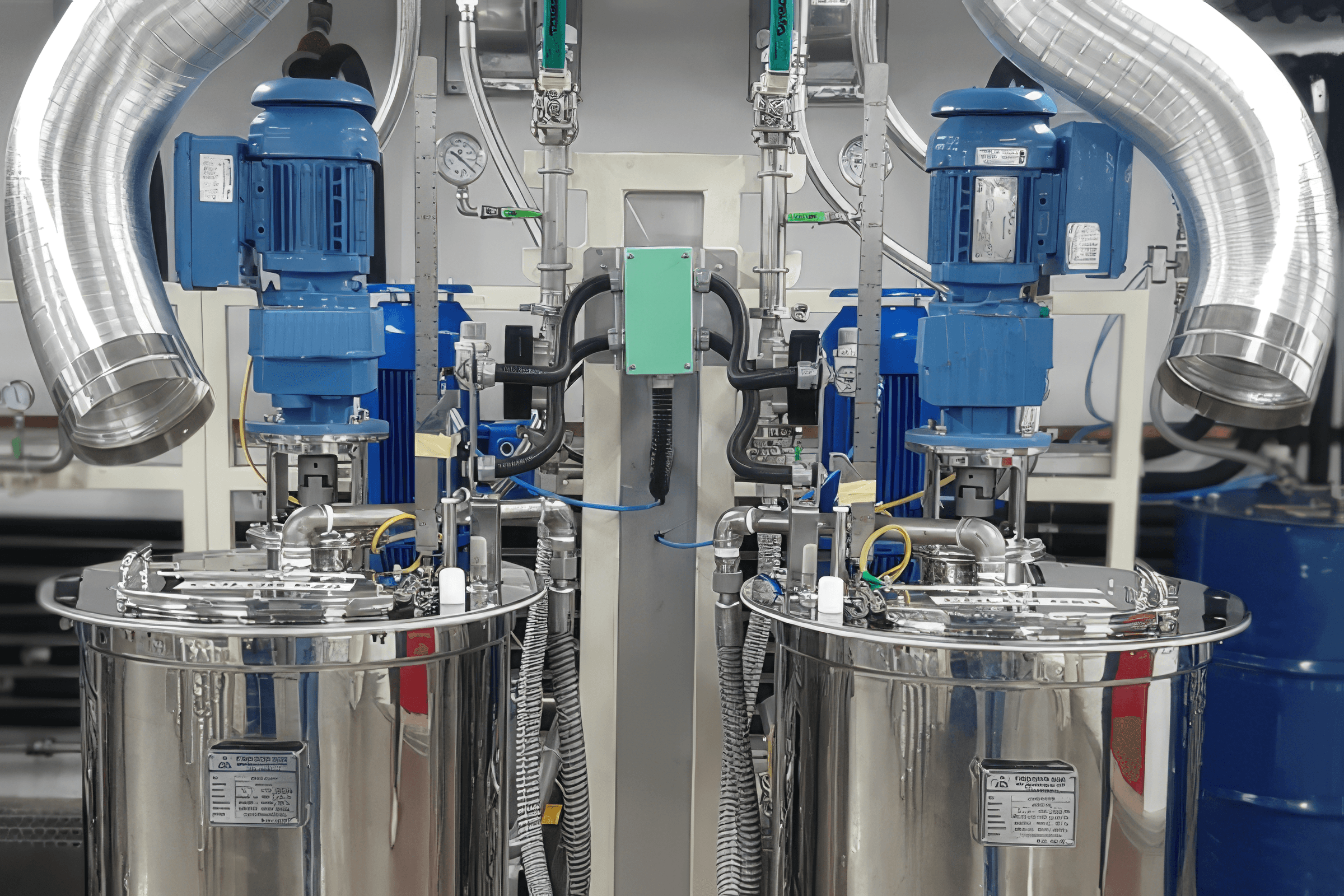
PT Solusi Rekatama Makmur designs, supplies, installs, and commissions paint circulation systems (PCS) for factories in Indonesia as an authorized Graco distributor since 2002. Our scope is the complete loop: paint mix room, circulation pumps, back pressure regulators, filtration, piping and hose, through to the gun drop at every spray booth.
We work from our technical center at MM2100 Cibitung, Bekasi, with head office in Jakarta and a branch in Surabaya. If your paint settles in the pipe, colour drifts between booths, or solvent consumption keeps climbing, that is usually a circulation problem rather than a gun problem. Reach us on WhatsApp (opens in a new tab) or at sales@solusirm.com.
Why factories in Indonesia trust us with their paint loop
- Authorized Graco distributor since 2002 — more than two decades of industrial fluid handling in Indonesia
- Graco Asia Pacific Distributor Leadership Club, 2018 and 2019
- 500+ completed projects across automotive, manufacturing, and general industry
- Certified to ISO 9001:2015 and SMK3
- Technical center and demo lab at MM2100 Cibitung, Bekasi — pumps and regulators can be seen running before you decide
- Genuine Graco spare parts held at our Cibitung warehouse, so a diaphragm or seal replacement does not wait on an import
- Meijiflex distributor for solvent-resistant composite hose, so the flexible runs in your loop are not sourced separately
- Service team with a 24/7 response commitment for loops already in production
What a paint circulation system is, and when a factory starts to need one
A paint circulation system is a closed loop that keeps paint moving from the paint mix room to every application point and back to the tank. The difference against a plain supply system: with supply, paint only flows while a gun is pulled, and for the rest of the shift it sits still inside the pipe. In a circulation loop, the paint never really stops.
On a drawing that difference looks trivial. On the production floor it is not. Industrial paint is a mixture of pigment, resin, and solvent at different densities. The moment flow stops, the heavier pigment begins to fall out. After one shift the bottom of the pipe is richer than the top, and the first gun pulled in the morning sprays something different from what comes out an hour later.
The signs that a factory has outgrown plain supply usually arrive in order: colour starts to differ between booths, nozzles clog more often, operators add solvent to 'fix' the spray, and rework climbs with nothing having changed at the gun. If that pattern sounds familiar, the fluid path needs attention, not the spray equipment.
- More than one application point, especially spread across several booths
- Paints with heavy pigment — metallics, high solids, filled primers
- Continuous production, so paint has to be available across the whole shift
- A long run between the paint mix room and the booths, leaving paint standing in the pipe
- Finish quality targets that demand consistent colour unit to unit and day to day
Settling, viscosity, and shear: the three quantities that shape a loop
These are what we actually calculate when designing a loop, and all three pull against each other. First, fluid velocity has to stay high enough to keep pigment in suspension. Too low, and particles drop out along horizontal runs and anywhere flow does not reach.
Second, viscosity moves with temperature. In a hot Indonesian plant, paint circulating all day can pick up heat from the pump itself and thin out. The spray changes even though nobody touched a gun setting. A properly designed loop therefore accounts for run length, the number of bends, and — for sensitive materials — cooling or a heat exchanger.
Third, shear. Paint must not be worked too hard by pumps and regulators. Metallic materials suffer first: the aluminium flakes in them can fracture or change orientation, and the colour loses its metallic effect even though the chemistry is unchanged. That is why a paint circulation pump is chosen as a low-shear design rather than on capacity figures alone.
Designing a loop means finding where the three meet: fast enough not to settle, gentle enough not to damage the material, and stable in pressure at every gun drop from the nearest to the furthest.
Paint mix room and circulation loop architecture
The paint mix room is where the loop begins, and its layout decides how easy your plant is to run and maintain for years afterwards. What we design there is not only where the tanks stand, but the operator's sequence of work, access for cleaning, and compliance with the safety requirements that flammable materials carry.
From the paint mix room, a supply run carries paint out to the booths and a return run brings it back. Each gun drop takes paint off the supply run through its own regulator, so pressure at that gun does not move when another gun in the next booth opens or closes. Without that, the operator at the end of the line always gets a different spray from the operator at the start.
The detail most often missed on installations put in without calculation is the dead leg — a blind length of pipe where paint does not circulate. That is where settling and hardening begin, and the effect only shows months later as hard particles in the finish. A properly designed loop minimises dead legs on the piping drawing, rather than compensating afterwards with more flushing.
- Paint tanks with agitation matched to the material and batch volume
- A low-shear circulation pump as the prime mover for the loop
- Supply and return runs sized from flow rate rather than made equal by habit
- A back pressure regulator at the end of the loop to hold pressure steady
- Dual filtration to catch contaminants and agglomerates before the gun
- A fluid regulator at every gun drop so each application point stands on its own
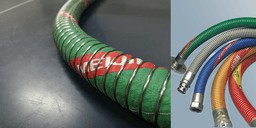
- Solvent-resistant composite hose for flexible runs into booths and robots
- A control panel to set pressure, monitor circulation, and record parameters
The Graco equipment we build circulation loops around
Pump selection is the first engineering decision on any PCS project, and no single type suits every material. What we weigh is the paint chemistry, the flow required, loop length, how sensitive the material is to shear, and — for plants counting energy — air or electrical consumption across years of running.
As an authorized Graco distributor, what we offer is a family of products built to work together inside one system: pumps, regulators, filters, and controls come through one technical support line. When a component needs replacing, there is no argument about whose responsibility it is.
For plants still on pneumatic pumps that have started costing out compressed air, electric pumps are usually the next conversation. The energy difference is real, but the decision still has to be worked case by case — we would rather show you the numbers for your loop than quote a general claim.
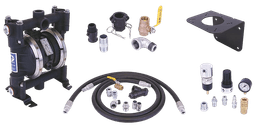
- E-Flo DCi — electric paint circulation pump for continuously running loops with precise pressure control
- E-Flo SP — electric supply pump moving material from drum or tank into the system
- QUANTM — electric double diaphragm pump for material transfer at far lower energy consumption than pneumatic
- HUSKY — AODD pump for transfer and circulation where an air-driven unit is the right answer
- MEIJIFLEX — solvent-resistant composite hose for flexible connections to booths, gun drops, and robots
Solvent-borne and waterborne: what changes in the loop design
The shift toward waterborne paint in automotive has many plants asking whether their existing loop still serves. The honest answer: some of it does, some has to be replaced, and what decides is every surface in contact with the paint.
Waterborne paint is corrosive to certain metals, so pipe, fittings, and pump wetted parts need suitable materials — generally stainless steel. Waterborne is also more sensitive to temperature and to microbial growth, so temperature control and cleaning procedure matter more than they do in a solvent-borne system.
Electrical safety changes too. Because waterborne paint conducts, its electrostatic application equipment needs different isolation, and that reaches back into loop design and equipment placement. If a move to waterborne is on your roadmap, the loop and the application system are best discussed together from the start rather than in sequence.
The industries that most often run circulated paint
Circulation becomes necessary wherever production runs continuously and colour is judged unit by unit rather than batch by batch. Automotive is the clearest case, but not the only one.
In vehicle assembly and its component suppliers, one colour has to match across several booths and often several processes. In heavy equipment and metal components, high-solids paint settles quickly enough that circulation is a requirement rather than an option. In furniture, electronics, and consumer goods, the reason is more often material efficiency and colour change speed.
We also work with plants not starting from nothing: an existing loop whose pumps are past serviceable life, a paint mix room that needs rearranging because colours were added, or a line about to gain a robot and therefore needing better pressure stability than it has today.
- Vehicle assembly, body builders, and tier 1 and tier 2 component suppliers
- Heavy equipment, metal components, and steel fabrication running high-solids paint
- Electronics and consumer goods with tight colour tolerances
- Metal and wood furniture at medium to high production volume
- Plants moving a process from manual spraying to robot painting
Direct supply compared with a circulation loop
Both get paint to the gun. What separates them is what happens to the paint while it is not being sprayed. These are the comparisons that come up most often in a first conversation.
| Direct supply (dead-end) | Paint circulation system | |
|---|---|---|
| Paint when idle | Stands in the pipe, pigment begins to settle | Keeps moving, suspension holds |
| Colour consistency between booths | Depends on distance and standing time | Same from the first drop to the last |
| Pressure stability when another gun opens | Pressure drops with it | Held by the back pressure regulator |
| Solvent consumption | Rises through flushing and manual correction | Falls as cleaning becomes scheduled |
| Nozzle clogging | Frequent, particularly at shift start | Rare while filtration is maintained |
| Upfront investment | Lower | Higher, repaid through material and rework |
| Suited to | One application point, intermittent production | Many gun drops, continuous production |
How we run a PCS project
Site audit and material data
We come to the plant to see the paint mix room, existing pipe runs, and the number and position of gun drops, and we record which paints you run along with their technical data from your paint supplier.
Flow rate calculation and line sizing
From the number of application points and consumption per gun we work out the flow required, supply and return pipe sizes, and pressure drop along the route — including the furthest point, which usually governs the result.
Loop and paint mix room skid design
We produce the paint mix room layout, piping diagram, pump and regulator selection, and filtration and hose specification. This is the stage that removes dead legs, before a single pipe is installed.
Skid fabrication and site installation
The skid is assembled and tested before shipping, then our team installs the runs in your plant in an agreed sequence that keeps disruption to running production as small as possible.
Commissioning, pressure setting, and training
The loop is run, pressure is set at each gun drop, and spray results are verified at every point. Your operators and maintenance team are trained on daily running, colour change, filter cleaning, and common faults.
Spare parts and service once it is running
Genuine Graco spare parts are held at our Cibitung warehouse and our service team carries a 24/7 response commitment. We also help you decide which components are worth stocking on your side.
We build the system; we are not a coating job shop
Worth saying early so neither side wastes time: PT Solusi Rekatama Makmur is an equipment supplier and system integrator, not a painting service. We do not take in parts or units to be coated at our premises.
What our work produces is production capability standing inside your own plant — a paint circulation loop you own, you operate, and your team maintains. If what you need is to send parts out to be painted by somebody else, you are looking for a coating service or a job shop rather than a systems supplier like us.
We are also not a retail spray equipment shop. Our focus is industrial fluid handling: paint circulation, paint kitchens, and sealant and adhesive dispensing for production lines — not loose sprayer units for light duty.
Common questions about paint circulation systems
- When does a factory actually need a paint circulation system?
- Generally when there is more than one application point, production runs through the shift, and the paint carries pigment that settles readily. The practical signs: colour differs between booths, nozzles clog at the start of a shift, or operators routinely add solvent to correct the spray. When all three appear together, the fluid path is what needs work.
- What is the difference between a supply system and a circulation system?
- In a supply system, paint only moves while a gun is pulled and otherwise stands in the pipe. In a circulation system, paint flows continuously from the paint mix room out to the gun drops and back to the tank, so pigment stays in suspension and pressure at each point is held steady by a back pressure regulator.
- How do you prevent pigment settling in the paint line?
- By keeping fluid velocity in the pipe above what the material requires, eliminating dead legs at the piping design stage, sizing pipe from real flow rates, and maintaining filtration on schedule. Settling is almost always a fluid path design problem rather than a problem with the paint.
- What does a paint circulation system cost to build?
- It depends on scope: how many colours, how many gun drops, loop length, the material, and whether the paint mix room exists already or is being built. What we can explain from the start is which factors drive the figure, and after the site audit we quote it broken down by section so you can judge what is essential and what can be phased.
- Can a loop be installed in a plant that is already in production?
- Yes, and it is what we do most often. The work is sequenced so that the disruptive parts fall outside production hours or into an already scheduled shutdown. We agree the phasing with your maintenance team after the audit.
- What if our plant moves to waterborne paint?
- The wetted parts need suitable materials, generally stainless steel, and temperature control and cleaning procedure become more important. The electrostatic application equipment differs too, because waterborne paint conducts. If that move is already planned, it is best discussed alongside the loop design from the beginning.
- Does PT Solusi Rekatama Makmur take in parts for painting?
- No. We design and install paint circulation systems and finishing equipment inside customer plants, and we do not receive parts for coating. If your need is to send parts out to be painted, you are looking for a coating service or job shop rather than a systems supplier.
- What about spare parts support once the system is running?
- We hold genuine Graco spare parts at our Cibitung warehouse, so routine replacements such as diaphragms, seals, and filter elements do not wait on an overseas shipment. During training we also set out which components are worth stocking at your plant.
Related reading
- Paint Circulation System Engineering: Sizing, Pressure, and Maintenance in Indonesian PlantsThe engineering behind a paint circulation loop: how fluid velocity and pipe size are calculated, how pressure is held steady at every gun drop, how filtration and temperature are managed, and how to read a loop that has started misbehaving.
- Robotic Painting versus Manual Spraying: The Cost Comparison for Plants in IndonesiaThe question is nearly always the same: how long before a painting robot pays for itself. That answer cannot be quoted from a brochure, because the number is built out of your own plant's data. This guide breaks the comparison into parts you can fill in with your own figures.
Discuss your paint circulation loop
Tell us which paints you run, how many gun drops need serving, and what the plant layout looks like. Our engineering team will help work out the flow requirement and line sizing, and we reply within 2 business hours.